


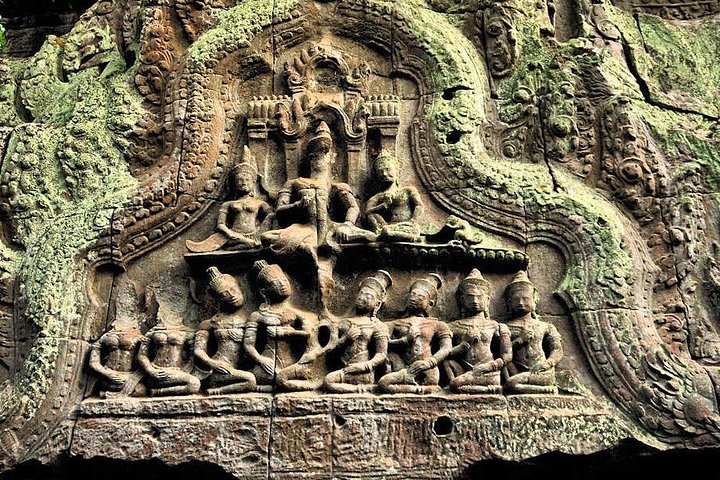





Embark on a private tour of the ancient Khmer temples of Angkor Thom, Bayon, Ta Phrom, and Angkor Wat. Discover the grandeur and delicate details of these 9th to 12th-century masterpieces.
Embark on a private tour of the ancient Khmer temples of Angkor Thom, Bayon, Ta Phrom, and Angkor Wat. Discover the grandeur and delicate details of these 9th to 12th-century masterpieces.
- Angkor Thom South Gate - Begin the day with a visit to the ancient capital of Angkor Thom, dating back to the 12th century. This expansive walled complex was the center of the world’s largest city in 1200. After the Chams occupied Angkor from 1177 to 1181, King Jayavarman VII constructed an impregnable fortress at the heart of his empire. The…
- Angkor Thom South Gate - Begin the day with a visit to the ancient capital of Angkor Thom, dating back to the 12th century. This expansive walled complex was the center of the world’s largest city in 1200. After the Chams occupied Angkor from 1177 to 1181, King Jayavarman VII constructed an impregnable fortress at the heart of his empire. The scale is truly impressive, and visitors are immediately struck by Jayavarman’s audacity upon arriving at the city’s gates. The causeway features an intricate bridge illustrating the Churning of the Ocean of Milk from Hindu mythology, where the devas (gods) and asuras (devils) engage in a tug of war with a naga (seven-headed serpent) to obtain the elixir of immortality. Its vast walls, approximately 6m wide, 8m high, and 13km long, contain numerous monuments.
- Bayon Temple - Next, explore Bayon Temple, surrounded by faces on all sides. Visitors are captivated by the enigmatic and enchanting Bayon Temple. Located at the exact center of Angkor Thom, it is an eccentric expression of the creative genius and inflated ego of Cambodia’s most celebrated king. Its 54 towers are each crowned with the four faces of Avalokiteshvara (Buddha of Compassion), which bear a striking resemblance to the king himself. These colossal heads gaze down from every side, exuding power and control with a hint of compassion, just the mix needed to maintain such a vast empire.
Unlike his predecessors who worshipped the Hindu deities Shiva and Vishnu, Jayavarman VII embraced Mahayana Buddhism as the source of royal divinity. This distinguishes the Bayon from many other Angkorian monuments. The bas-reliefs here depict intricate scenes of ancient battles against the Chams and provide a fascinating glimpse into daily life during the Angkor period.
- Baphuon Temple - Continue to Baphuon, located in Angkor Thom, northwest of the Bayon. Built in the mid-11th century, it is a three-tiered temple mountain constructed as the state temple of Udayadityavarman II, dedicated to the Hindu God Shiva.
- Terrace of the Elephants - Stroll to the Terrace of the Elephants, part of the walled city of Angkor Thom. The terrace was used by Angkor’s king Jayavarman VII as a platform to view his victorious returning army. It was connected to the palace of Phimeanakas, of which only a few ruins remain.
- Terrace of the Leper King - Visit the Terrace of the Leper King, located in the northwest corner of the Royal Square of Angkor Thom, Cambodia. Built in the Bayon style under Jayavarman VII, its modern name comes from a 15th-century sculpture found at the site. The statue depicts the Hindu god Yama, the god of death.
- Phimeanakas - Next, visit Phimeanakas or Vimeanakas, a Hindu temple in the Khleang style, built at the end of the 10th century during the reign of Rajendravarman, and completed by Suryavarman I in the form of a three-tier pyramid as a Hindu temple.
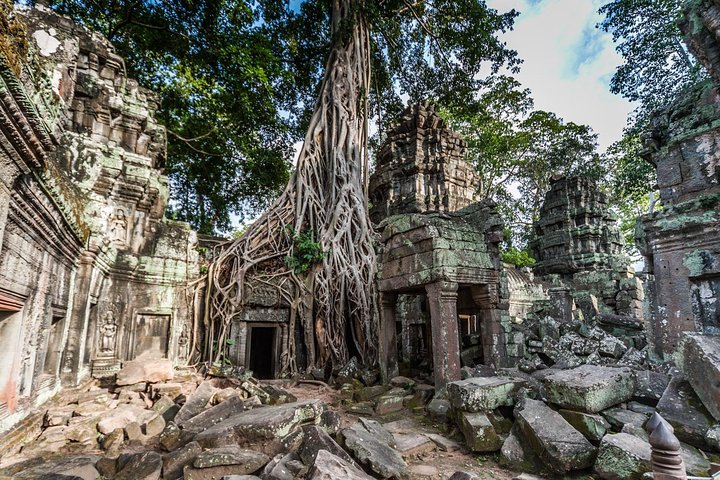
- Ta Prohm - Continue to Ta Prohm, perhaps the most atmospheric of all Angkor’s treasures. The temple was a monastery built by Jayavarman VII as a residence for his mother. Ta Prohm has been left to the forces of nature by archaeologists to showcase the incredible power of nature.
It has been largely overtaken by the jungle, and as visitors climb through the crumbling stone structures, they see many giant trees growing out of the temple itself. At every turn, one might expect to see Indiana Jones or Lara Croft emerge from behind a fallen pillar. It is one of the most frequently visited temples, with visitors often arriving midday to enjoy the protective forest canopy above the ruined temple. Ta Prohm appears as many of the monuments did when European explorers first discovered them. This was one of the settings for Lara Croft’s adventures in “Tomb Raider.”
Afterwards, take a break for lunch.
- Angkor Wat - After a lunch break, explore Angkor Wat in the late afternoon and sunset hours. As the largest and most awe-inspiring monument at Angkor, Angkor Wat was built as the funeral temple for King Suryavarman II, who ruled from 1112 to 1152. Angkor Wat consistently impresses both first-time and returning visitors with its grand scale, surreal bas-reliefs, and incredible attention to detail.

- Private air-conditioned transportation
- All taxes, VAT, and service charge included
- Complimentary mineral water during sightseeing and transfers
- Admission to Angkor Archaeological Park temples (single-day ticket)
- All sightseeing activities and entrance fees per itinerary
- Expert guidance from a licensed English-speaking professional
- Private air-conditioned transportation
- All taxes, VAT, and service charge included
- Complimentary mineral water during sightseeing and transfers
- Admission to Angkor Archaeological Park temples (single-day ticket)
- All sightseeing activities and entrance fees per itinerary
- Expert guidance from a licensed English-speaking professional
- Personal, travel and health insurance
- Drinks during meals
- Lunch on your own account
- Personal, travel and health insurance
- Drinks during meals
- Lunch on your own account
These temples were built from the 9th to 12th centuries by a Khmer empire that controlled not only Cambodia but large parts of what are now Laos, Thailand and Vietnam as well. With their grandeur of scale and extraordinary delicacy in detail, the temples rank among humankind’s most supreme artistic expressions. Today, 8:00am meet your personal guide and…
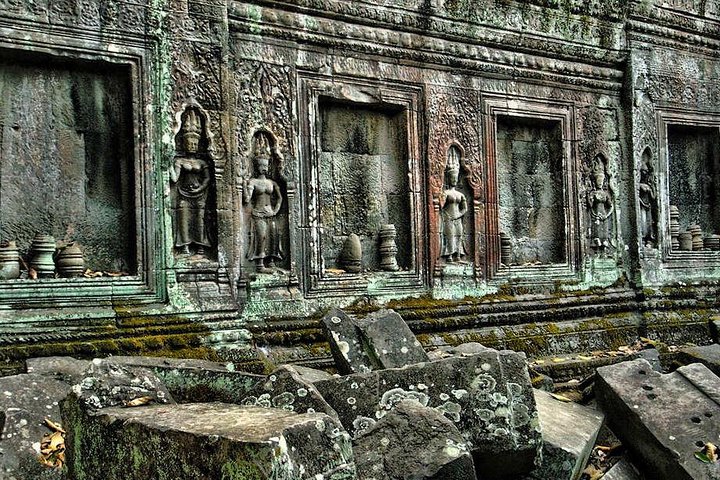
These temples were built from the 9th to 12th centuries by a Khmer empire that controlled not only Cambodia but large parts of what are now Laos, Thailand and Vietnam as well. With their grandeur of scale and extraordinary delicacy in detail, the temples rank among humankind’s most supreme artistic expressions. Today, 8:00am meet your personal guide and driver spend the morning visit the ancient capital of Angkor Thom (12th century). See the South Gate with its huge statues depicting the churning of the ocean of milk, visit Bayon temple (unique for its 54 towers decorated with over 200 smiling faces of Avolokitesvara), Baphuon (recently re-opened after years of restoration), the Royal Enclosure, Phimeanakas, the Elephants Terrace, and the Terrace of the Leper King. Next, you’ll continue to Ta Phrom. Built in 1186, Ta Phrom was dedicated to the mother of Jayavarman VII. Its atmospheric dark gray sandstone towers and courtyards exude an aura of reverence and mystery.
For a full refund, cancel at least 24 hours before the scheduled departure time.
For a full refund, cancel at least 24 hours before the scheduled departure time.


